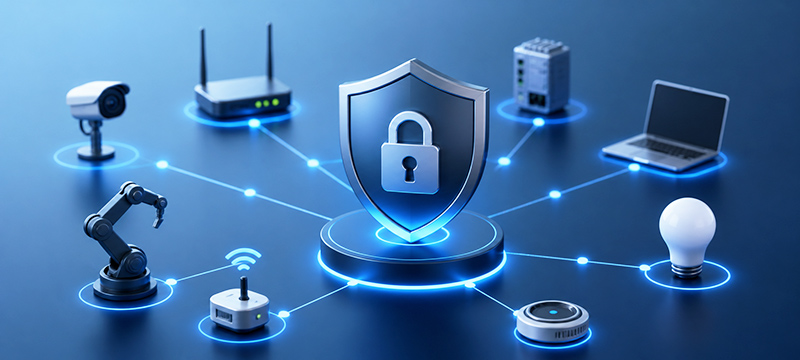
As the world becomes increasingly reliant on technology—and with billions of connected devices now part of the Internet of Things (IoT)—it is important to safeguard identity systems. An effective shield from unwanted access is something that every organization longs for. Robust barriers against data breaches help to preserve trust. In this post, we will explain how these measures allow secure operations and their significance for every digital and IoT environment today.
Why Identity Security Matters
Identity systems manage access to sensitive resources across IT systems and connected devices. In IoT deployments, this includes sensors, gateways, and cloud platforms. When you do not defend yourself, attackers can pretend to be legitimate users—or even devices—and steal sensitive data or disrupt operations. These events can cause financial loss and reputational damage. Robust protection guarantees that only authorized users and devices access data and tools. Identity system protections are no longer optional; they are merely a baseline for organizations of all kinds.
Components of Identity Protections
There are a few critical components to identity protection. These are ways to ensure a user’s—or device’s—identity before they are authenticated. Authorization systems only allow the user or device to access the information they actually have permission to see. Activity is tracked by monitoring tools, along with suspicious behavior across both IT and IoT infrastructures.
Multi-Factor Authentication
For example, multi-factor authentication is one such approach. It requires the user to provide two or more different types of evidence to verify their identity. For example, you may use a password along with a fingerprint or a special code sent to your phone. In IoT contexts, this can extend to device certificates or hardware-based credentials. It requires one or more additional steps in the verification process, thus making it difficult for intruders to break in even if they know the password.
Role-Based Access Control
One other really important safeguard is role-based access control. With this system, permissions are assigned within job roles instead of to individuals. Employees are granted only access to the data or applications required as part of their functions. Similarly, IoT devices can be assigned roles with limited permissions. This way, if one of your accounts or endpoints happens to be compromised, your risk is reduced.
Continuous Activity Monitoring
Continuous monitoring is required for keeping operations secure. In short, logs include every attempt to access or use a protected system. In IoT environments, this also includes device behavior and network activity. Such records can be searched by automated tools to detect abnormal sign-in patterns, like sign-in happening from an unknown location or device. If such activity is detected, alerts let you quickly investigate and take action.
Identity Provisioning and Deprovisioning
Managing users through accounts effectively supports security. Identity provisioning is the process of creating accounts for new users and assigning them the appropriate permissions. In IoT, this extends to securely onboarding devices. Deprovisioning is removing access when someone leaves an organization or when a device is retired or compromised.
Encryption and Secure Communication
Safeguarding identity data in transit is also essential. Secure channels make sure that credentials, tokens, and other sensitive data cannot be observed. In IoT deployments, where devices often communicate over public or wireless networks, this is particularly critical. Using strong encryption standards protects against interception and theft while communicating.
User Education and Awareness
Not every threat can be thwarted by technology. The fact that human error is still a major contributor to these security incidents is significant. Training staff to identify suspicious messages and recognize behaviors they should avoid remains essential. In IoT environments, this also includes awareness of device security risks. Use clear policies to remind your staff of how to handle and report on sensitive data.
Regular Audits and Compliance
Conducting periodic reviews to ensure protections are being borne out as intended is a must. Audits assess systems for any possible gaps, legacy settings, or superfluous authorizations. For IoT, this includes reviewing device identities and access policies. Such checks also ensure adherence to data protection and security regulations. Implementing audit findings reinforces defenses.
Adaptive Security Strategies
Threats to identity systems are evolving. With the rapid growth of IoT ecosystems, the attack surface continues to expand. New risks will continue to emerge, so adaptive security strategies that allow organizations to respond to these new risks as they evolve are also essential. It might be updating access policies or requiring new authentication methods, or it could also mean implementing new monitoring tools.
Incident Response Planning
Not all attacks can be prevented, even with strong protections. An incident response plan prepares organizations to respond quickly if things take a turn for the worse. The procedure gives clear steps that lead to detection, containment, and recovery. In IoT scenarios, this may include isolating compromised devices. This training ensures teams can focus and act appropriately to minimize damage in the wake of a real incident.
The Future of Identity Security
With the continued expansion of digital operations and IoT deployments, identity protection will become increasingly critical. Artificial intelligence and automation provide new methods for detecting threats and enabling faster responses. Organizations need to keep abreast of the latest techniques and best practices.
Conclusion
Identity system safeguards are critical to modern IT and IoT environments, including protection against IoT security threats. The best line of defense is a combination of technical controls, education, and continuous review. This is about protecting identities, devices, data, reputation, and operations of every organization.
The post Understanding Identity System Protections in Modern IT and IoT Environments appeared first on IoT Business News.
