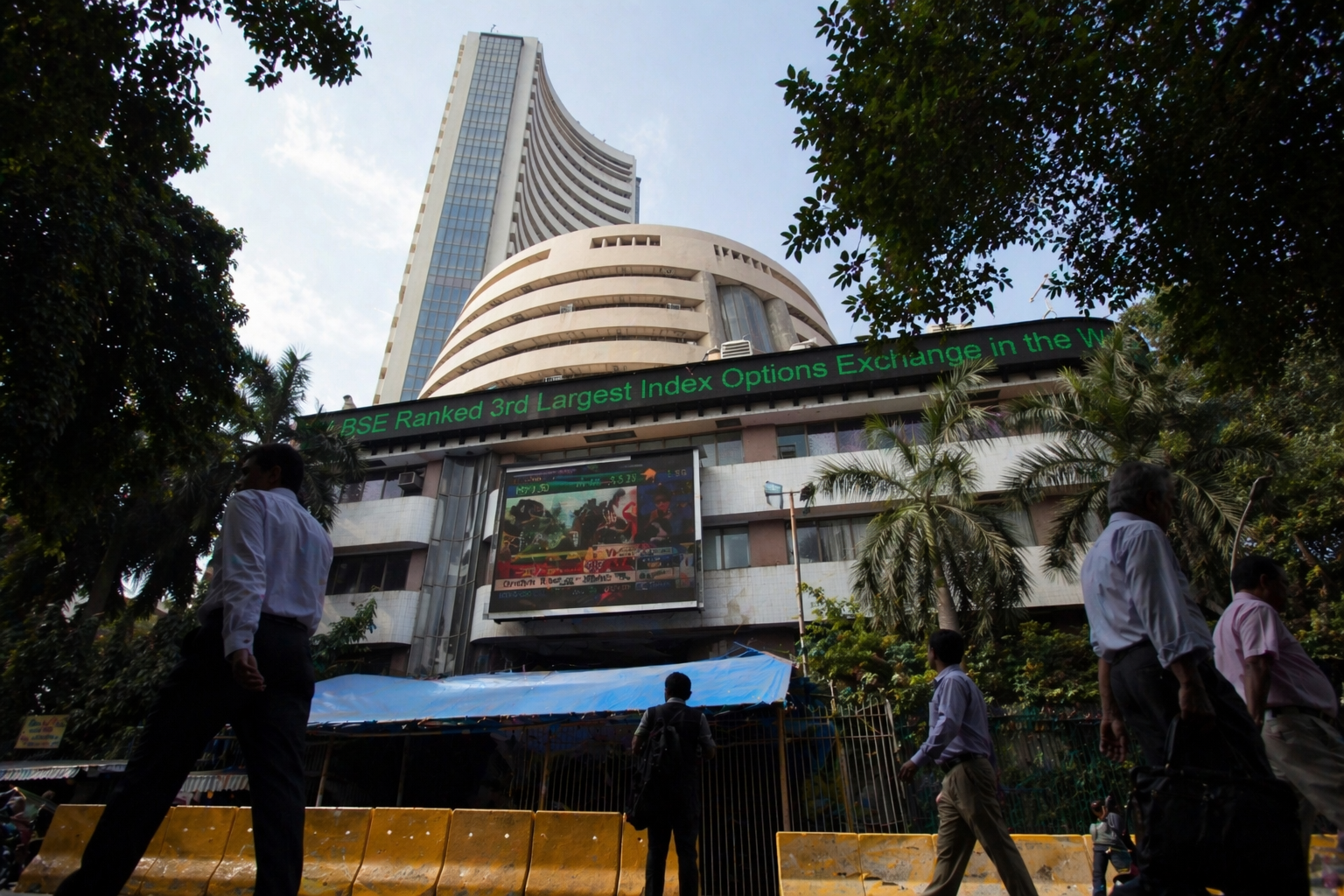
Indian equities came under renewed pressure after HSBC downgraded its stance on the market to underweight, warning that a surge in oil prices linked to the Middle East conflict could derail the country’s earnings recovery and dampen investor sentiment.
The downgrade, the brokerage’s second in less than a month, reflects growing concern that rising energy costs will weigh on macroeconomic stability in one of the world’s largest crude importers.
Nifty 50 and BSE Sensex have already declined sharply this year, by 6.7% and 7.9% respectively, underperforming several global peers.
Oil surge clouds earnings outlook
Brent crude prices have climbed more than 40% since the conflict escalated in late February, breaching the $100-a-barrel mark and raising concerns over inflation and growth.
HSBC flagged that sustained high oil prices could force downward revisions to corporate earnings expectations.
“India now looks less attractive than North East Asian peers in the current macro setting,” HSBC said in a note on Thursday.
The brokerage expects oil and gas markets to remain tight through the coming quarters, adding pressure on margins and consumption.
It warned that even a further 20% increase in crude prices could shave off 1.5 percentage points from earnings growth forecasts, which are currently pegged at 16% for 2026.
Also read: Why Goldman Sachs slashed its Nifty 50 target by 3,400 points
Valuation concerns and foreign outflows
While valuations have moderated from previous highs, HSBC cautioned that they could appear stretched again if earnings estimates are revised lower.
The brokerage also pointed to persistent concerns among foreign investors, particularly around currency stability.
Rupee depreciation risks could intensify if oil prices remain elevated, potentially accelerating capital outflows.
Foreign portfolio investors have already withdrawn billions from Indian equities over the past year, reflecting a more cautious stance toward emerging markets.
HSBC added that rising concerns about the long-term impact of artificial intelligence on India’s IT services sector are also weighing on sentiment, particularly among global investors.
Markets react to geopolitical tensions
Indian benchmarks opened lower on Thursday, tracking a broader decline across Asian markets as geopolitical tensions escalated.
The Nifty 50 slipped more than 0.6%, while the BSE Sensex declined around 0.9% in early trade.
Market breadth remained weak, with 12 of the 16 sectoral indices in the red.
In contrast, broader markets showed slight resilience, as the Nifty Smallcap 100 edged up 0.3% and the Nifty Midcap 100 gained 0.1%.
Across the region, Asian equities dropped about 1%, while Brent crude extended its rally for a fourth consecutive session, climbing to $103 per barrel amid ongoing uncertainty around Middle East peace negotiations.
“(With) the price of Brent crude bouncing back to $103, there is increasing risk to global growth in general and higher risk to India’s macros in particular,” said VK Vijayakumar, chief investment strategist at Geojit Investments.
Financial stocks remained under pressure amid continued foreign selling, while broader market sentiment stayed fragile.
Foreign investors have net sold Indian shares worth $4.3 billion in April and $18.5 billion so far in 2026.
Pockets of resilience remain
Despite the broader weakness, certain sectors showed resilience.
Pharmaceutical stocks advanced on the back of strong growth expectations, supported by steady demand and positive industry trends.
Brokerage firm Nomura noted that India’s pharmaceutical market maintained double-digit growth in March, with several companies outperforming expectations.
HSBC also highlighted selective opportunities in private banking, base metals and healthcare, suggesting that investors may still find value in specific pockets of the market even as the broader outlook weakens.
Balancing domestic support and global risks
Domestic inflows, particularly through systematic investment plans, continue to provide some stability to Indian equities.
However, analysts say a sustained recovery will likely depend on renewed foreign interest, especially as initial public offering activity is expected to pick up after a subdued start to the year.
For now, rising oil prices and geopolitical uncertainty remain the dominant drivers, leaving investors cautious about the near-term trajectory of India’s equity markets.
The post HSBC downgrades Indian equities to Underweight as oil surge hits markets appeared first on Invezz
