Fourteen years ago this month, The Office aired the episode, Scott’s Tots, in which the well-meaning but highly delusional manager of a struggling paper company, Michael Scott, must face the music for past decisions. Ten years prior, he had promised an entire third-grade class that he would pay their college tuition if they graduated from high school. The only catch was that, as he says in the episode, he expected to be a millionaire when he made that promise.
Unfortunately for him, he wasn’t even close.
The scene is excruciatingly awkward. Because of it, the episode is consistently ranked as one of the most cringe-worthy of all time. The students, now seniors, perform a choreographed dance in Scott’s honor, school administrators shower him with praise, and he is heralded as a hero who is on the cusp of transforming their lives. When he finally confesses that he can’t pay for their college, he offers the students a consolation prize: laptop batteries… without the laptop.
Why are we talking about a fourteen-year-old episode of The Office? Because the federal government has just created its own version of Scott’s Tots. Unlike Michael Scott, who at least had the decency to look mortified even in the photo of him making the promise, Washington types are patting themselves on the back.
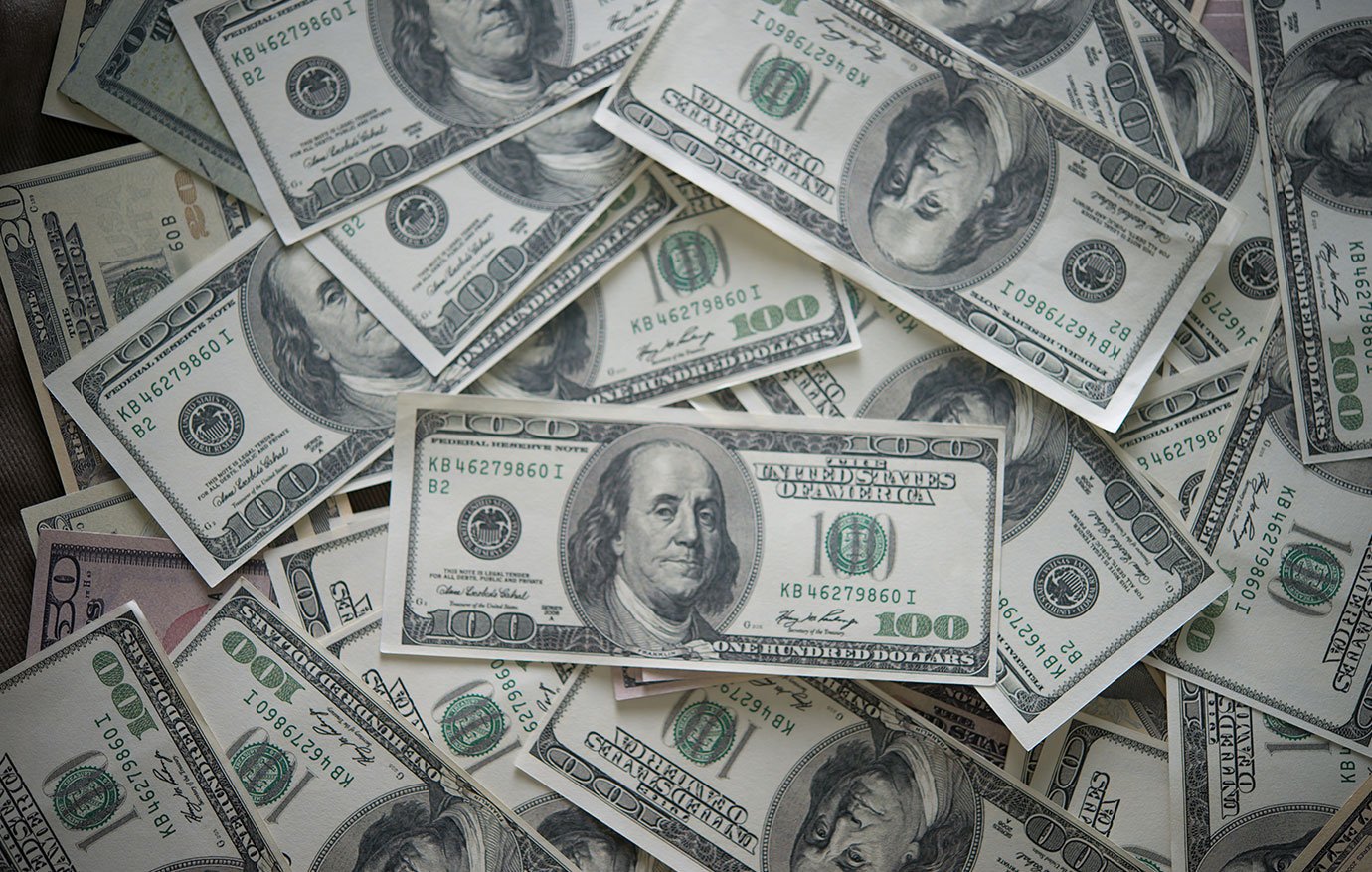
Under the One Big Beautiful Bill Act, the Treasury Department will deposit $1,000 into so-called “Trump Accounts” for every American child born between 2025 and 2028, which will then be invested in a broad stock market index fund. As Senator Ted Cruz pointed out in the Oval Office, these accounts could grow to $170,000 at age 18 if the annual contributions are maxed out ($5,000 each year) and as much as $700,000 by the time the child is 35 years old. The Treasury is even more sensational, claiming that a fully funded and untouched account could grow to as much as $1.9 million by 28.
All of this sounds absolutely amazing. Far be it from me to discourage people from saving money for the future. But there’s an uncomfortable question that nobody in Washington wants to ask: who is going to be around to make sure that these promises are kept?
The federal government already runs another program that collects money from hardworking Americans today with promises of future payouts. It’s called “Social Security.” According to the Social Security Trustees’ own report, it will be unable to pay full benefits by 2033. At that point, there will be an automatic 23 percent decrease in benefits. This is not a hypothetical cut that might happen if Congress doesn’t act. This is an automatic, legally mandated cut baked into the program’s structure. The Old-Age and Survivors Insurance Trust Fund will be depleted and the program will only be able to pay out what it receives in current payroll taxes.
This isn’t a secret. The Trustees publish these reports every year and, by statute, distribute them to Treasury Secretary Scott Bessent, Labor Secretary Lori Chavez-DeRemer, and Health and Human Services Secretary Robert Kennedy Jr. — all members of the President’s Cabinet.
The Trump Accounts follow a familiar pattern in federal policy: make generous promises today that will require future politicians, future taxpayers, and future Congresses to actually deliver lest they risk the wrath of voters who have been promised something for nothing.
Consider the structure of the Accounts. Children born in 2025 will turn 18 in 2043, 28 in 2053, and 35 in 2060. Will the White House be controlled by a Republican or a Democrat? Or an entirely new party? What fiscal pressures will the country be facing? Nobody knows. But the children receiving these accounts will have spent (in this case, literally) their entire lives expecting and planning on a benefit that exists only because a single Congress in 2025 decided to create it by the slimmest of majorities.
If this sounds familiar, it’s because it is. In 1935, Congress created Social Security with the implicit promise that it would be there for future retirees. Ninety years later, the program is eight years away from insolvency and is $25 trillion in the hole. The ratio of workers paying into the system relative to retirees drawing from it has collapsed from roughly 16-to-1 in 1950, to 5-to-1 in 1960, to just 3-to-1 today — and it continues to fall.
The Trump Accounts, like Social Security, create a constituency that will absolutely demand the benefits they were promised. And just like Social Security, the costs of fulfilling these promises will fall on people who had no say in the pledge to begin with because many of them haven’t even been born yet.
But what makes the Trump Accounts particularly clever as a political strategy is their incredibly modest initial costs. With roughly 3.6 million births per year in the US, that equates to an expense of $14.4 billion in seed money over the course of four years. This is a lot of money for us mere fiscal mortals, but for a Congress that spends about $7 trillion per year already, $14.4 billion represents less than one day’s worth of spending. That’s basically a rounding error for them.
But if there’s one thing that Congress is good at, it’s expanding initially modest programs that cover very few people into overgrown behemoths covering ever more people. The temporary pilot program for babies born between 2025 and 2028 will almost certainly face political pressure to become permanent. The $5,000 contribution limit will face pressure to increase. The restriction to children will face pressure to include children born before 2025. Every expansion will increase the implicit commitment and enlarge the constituency demanding it in 2043 and beyond.
Michael Scott genuinely believed that he would be a millionaire by the time his Tots graduated from high school. He might have been delusional, but he was never malicious. His intentions were pure, but his fiscal projections were pure fantasy.
The federal government operates under a similar delusion, but with much higher stakes. They’re not talking about promising tens of thousands of dollars to a few dozen kids, they’re promising hundreds of thousands, if not millions, of dollars to millions of people. They are promising future benefits today based on rosy projections about future growth, future productivity, and future willingness to pay. When those projections do not materialize, the pattern is clear: blame their predecessors, demand more revenue at taxpayer expense, or quietly cut benefits. Optimistic assumptions about the future can make today’s promises look affordable, regardless of how bombastic they are. Realistic assumptions make them look like Scott’s Tots.
In the show, after devastating the students with news that their college dreams have been shattered, Michael Scott drives home with his assistant, Erin. The episode’s genius is that Michael learns absolutely nothing from this. He escapes accountability by just leaving the room and, by next week’s episode, he’s moved on to being upset that someone else is playing Santa at the company Christmas party. The students are left with nothing but laptop batteries and broken promises.
In 2043, when the first Trump Account babies turn 18, will the accounts contain what they were promised? Will the tax advantages remain in place? Will Congress have changed the rules, raided the funds for other purposes, or means-tested the benefits to zero?
Nobody knows the answers to these questions. But if the federal government’s track record with long-term promises is any guide, we might want to prepare ourselves for the possibility of receiving laptop batteries, laptop not included.
